




Understanding Shunt Resistors: Essential Components for Current Measurement
- 2024-12-23 16:34
Related links
본문

Chapter 4: Shunt Resistors
Understanding Shunt Resistors: Essential Components for Current Measurement
1. What is a Shunt Resistor?
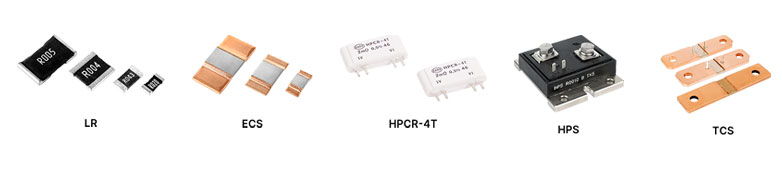
RMS Shunt Resistors
|
2. Principle of Shunt Resistors
V=I×R • V: Voltage across the resistor • I: Current flowing through the circuit • R: Resistance of the shunt resistor |
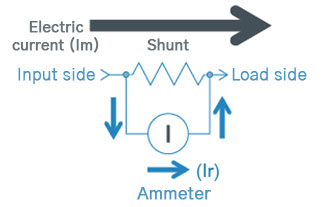
By applying Ohm’s Law, shunt resistors enable accurate current measurement. When current flows through the shunt resistor, it creates a small voltage drop, which can be used to calculate the current. These resistors are optimized for precise detection of minute voltage drops caused by current flow.
How It Works: 1. Current Flow: When current passes through the shunt resistor, it creates a small, proportional voltage drop. 2. Voltage Detection: Sensors or measuring devices detect this voltage drop. High-precision instruments are typically required due to the minimal magnitude of the drop. 3. Current Calculation: Using the measured voltage and resistance value, the current is calculated based on Ohm’s Law. |
1. Current Measurement: Indirectly measures current in a circuit. 2. Overload Protection: Detects excessive current to protect the circuit. 3. Power Management: Used in battery monitoring, motor circuits, and various applications for energy management. |
4. Types of Shunt Resistors
1. Metal Shunt Resistors: - High precision with low-temperature coefficients. - Suitable for high-current, low-resistance applications. 2. Thin Film Shunt Resistors: - Manufactured using thin-film technology, designed for small current sensing. - Compact and highly precise, ideal for electronic devices. 3. Wire-Wound Shunt Resistors: - Durable with excellent thermal and overload resistance. - Suitable for high-stress environments. |
5. Applications of Shunt Resistors
1. Solar Power Systems - Measures power generated by solar panels. - How It Works: Measures current from the panel to calculate generation and monitor efficiency. 2. Industrial Motor Control - Detects current in motor circuits, ensuring proper operation. - How It Works: Measures motor current for feedback control, preventing overcurrent damage. 3. EV Charging Systems - Monitors current supplied to EV batteries. - How It Works: Ensures safe and efficient charging by detecting charging current. 4. Smart Home Systems - Tracks household power usage in real time. - How It Works: Monitors mainline current to analyze energy consumption patterns. |
1. Current Measurement: - Connected in series within the circuit. - Measures the minute voltage drop caused by current flow. 2. Data Transmission: - Voltage drop is converted into a signal (analog/digital) for monitoring. |
1. Current Monitoring: Tracks output current from solar panels to assess efficiency. 2. Battery Management Systems (BMS): - Controls battery charging/discharging. - Prevents overcharging and over-discharging. - Calculates the State of Charge (SOC). 3. Inverter Optimization: - Maintains consistent output using data from the shunt resistor. - Enables Maximum Power Point Tracking (MPPT). 4. System Protection: - Detects overcurrent and prevents damage by triggering circuit breakers. |