




Everything About Metal-Clad Resistors
- 2024-12-23 16:19
Related links
본문

Chapter 3: Metal-Clad Resistors
Everything About Metal-Clad Resistors
The Core of Stable Electronic Devices: Metal-Clad Resistors
Metal-clad resistors are essential components in modern technology, delivering exceptional performance and durability even in high-temperature environments. From industrial machinery to electric vehicles, these resistors serve as unsung heroes of technological advancements.
Applications: Motor drives, braking systems, shock absorbers, and other industrial power systems.
Let’s explore the world of metal-clad resistors!
RMS Metal-Clad Resistors
|

1. What Are Metal-Clad Resistors?
Metal-clad resistors are robust resistors designed to withstand heat and mechanical shock, primarily used in industrial environments. Think of them as "resistors armored in metal." These resistors dissipate electrical energy as heat, protecting circuits from damage and resisting external shocks.
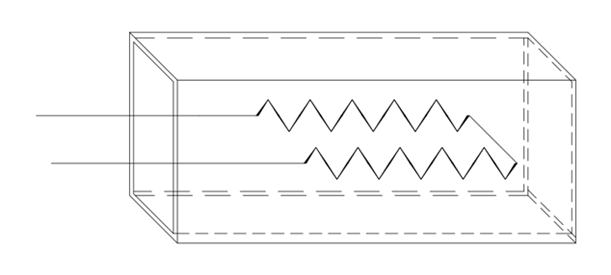
A metal-clad resistor is a type of resistor enclosed in a high heat-dissipation metal casing, typically aluminum, with the resistive element molded inside. When combined with an appropriate heat sink, they can handle higher power levels effectively.
* The exterior is encased in metal, while the interior contains a resistor element designed to limit the flow of electricity. |
Why Use Metal-Clad Resistors?
1. Enhanced power handling with proper heat sink and forced cooling configurations. 2. Superior mechanical strength due to metal casing. 3. Excellent moisture resistance and environmental protection. |
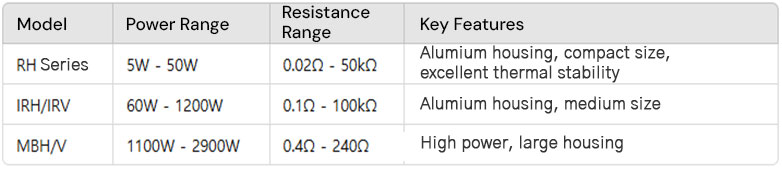
*Model Name: The name of each resistor series, categorized by power range and usage.
*Power Range: Indicates the power capacity (W) the resistor can handle.
*Resistance Range: Denotes the range of resistance values (Ω).
*Main Features: Highlights unique properties and applications of each series.
Common Applications
Metal-clad resistors are used as braking resistors, pre-charge resistors, dummy loads, and damping resistors. They are particularly suitable for short-duration high-energy dissipation needs, such as regenerative braking or pre-charging in electric vehicles.
3. Primary Applications of Metal-Clad Resistors
Metal-clad resistors play critical roles across various industries:
1. Automotive Industry - Pre-charge resistors for inrush current limitation. - Charging resistors for PRA (Power Relay Assembly) in EVs, HEVs, and PHEVs, enhancing battery and drive system safety. 2. Renewable Energy - Overload protection in wind turbines. - Power conversion circuits in solar inverters. 3. Industrial Automation - Motor drive and control systems. - Current control in welding equipment. 4. Railways and Transportation - Energy dissipation in train braking systems. - Control systems in elevators and lifts. 5. Power Distribution - Power conversion devices. - High-voltage power line protection systems. |
4. Metal-Clad Resistors in EVs (Pre-Charge Resistor)
Why Are Metal-Clad Resistors Crucial in Electric Vehicles?
Metal-clad resistors are extensively used as pre-charge resistors in electric vehicles (EVs, HEVs, PHEVs). These resistors are critical for managing inrush currents when connecting high-voltage batteries to the electric motor or other power components.
< Key Functions of Pre-Charge Resistors in EVs >
① Electrical Stability - Limits inrush current to protect batteries, capacitors, wiring, and electronic control units (ECUs). - Allows the system to stabilize before achieving normal operating conditions. ② Protective Features - Reduces electrical stress that can degrade circuits and components. - Minimizes wear on wiring and connectors by lowering the risk of high-voltage sparks. - Metal casing shields the resistor from mechanical and environmental stress. ③ Durability - Robust metal casing ensures reliable performance under extreme conditions, including high/low temperatures and intense vibrations. - Flame-retardant materials enhance safety in high-temperature or fire-prone scenarios. |
Pre-Charge Resistors in Action
1) The Need for Pre-Charge Resistors
Electric vehicle batteries typically operate at high voltages (400V to 800V or more). When first connected (e.g., at startup), a significant voltage difference exists between the battery and power components, potentially causing damaging inrush currents. Pre-charge resistors limit this current, ensuring the system operates safely.
2) Pre-Charge Circuit Configuration
Components:
• Metal-clad resistor (Pre-Charge Resistor) • Relays (main and pre-charge relays) • High-voltage capacitors |
Process:
1. Initial Phase (Pre-Charge Relay Activation) - At startup, the pre-charge relay activates, allowing current to flow through the resistor. - The high-voltage capacitor charges gradually. 2. Voltage Equalization - Once the capacitor voltage approaches the battery voltage, the inrush current impact is mitigated. 3. Main Relay Activation - The main relay connects the battery directly to the system. - The resistor completes its role and exits the circuit. |
3) Advantages of Metal-Clad Resistors in EVs
(1) Overload Power Handling • Essential for managing high transient power during pre-charge processes. (2) Efficient Heat Dissipation • Aluminum casing effectively dissipates heat generated by the resistive element. (3) Reliability and Durability • Operates reliably under extreme environments, meeting EV performance demands. (4) Compact Design • Saves space while maintaining high performance, ideal for compact EV layouts. |
Real-World Applications of Metal-Clad Resistors
1. Inverter and Motor Connections - Dissipates regenerative energy during motor deceleration or braking, protecting the inverter system. 2. Charging Stations - Controls inrush currents during initial connection. |
Conclusion