




A Beginner’s Guide to Understanding High-Frequency Resistors
- 2024-12-24 10:18
Related links
본문

Chapter 6: High-Frequency Resistors
A Beginner’s Guide to Understanding High-Frequency Resistors
Key Design Priorities • Low Inductance: Achieved by minimizing coil shapes or using flat structures. • Low Capacitance: Ensures minimal interaction between resistor terminals and surrounding materials. 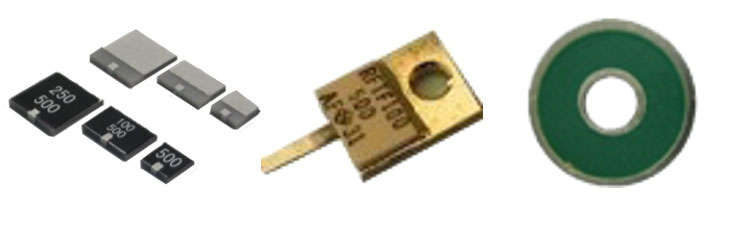 |
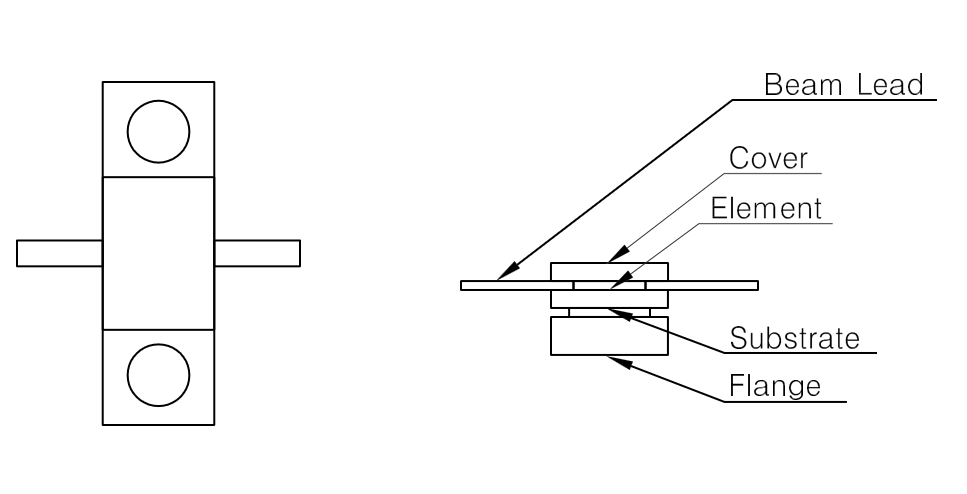
1. Structure of a High-Frequency Resistor (Example Model: TFR)
1) Resistive Element • Provides stable resistance at high frequencies. • Made from materials like metal film, thin film, or carbon-based elements. • Designed to minimize inductance and capacitance. 2) Substrate • Serves as the base for the resistive element. • Typically made from ceramic, alumina, or low-loss insulating materials. • Offers durability against both high-frequency signals and thermal stress. 3) Terminals • Provide electrical connection to the circuit. • Usually plated to reduce resistance fluctuation and signal distortion. Additional Features • Specially engineered resistive elements and HF substrates to reduce reactance. • Miniaturization and high heat resistance for efficient circuit operation. • Custom structures to minimize distortion and signal loss at high frequencies. |
2. Functions of High-Frequency Resistors
① Impedance Matching
Ensures that input and output impedances align, reducing signal reflection and maximizing power transfer.
② Termination
Absorbs signals at the end of a transmission line to prevent reflections, ensuring stability in RF and high-frequency systems.
③ Current Sensing
Measures or limits current flow in HF circuits to prevent overcurrent and protect equipment.
④ Noise Suppression
Reduces unwanted noise, filtering signals to improve overall system performance.
⑤ Power Distribution
Helps distribute current and manage power in high-frequency circuits.
3. Applications in RF Amplifiers
In RF amplifiers, high-frequency resistors play multiple roles: • Impedance matching • Signal termination • Oscillation suppression • Noise suppression • Power attenuation |
4. Detailed Roles in RF Amplifiers
1) Impedance Matching • Why it matters: Impedance mismatch leads to reflections, energy loss, and signal distortion. • HFR’s role: Acts as a termination load to absorb residual signals and stabilize the circuit. 2) Termination • Why it matters: Reflections at the amplifier’s output cause instability and signal distortion. • HFR’s role: Adjusts impedance at input/output networks to reduce reflections and optimize power transfer. 3) Oscillation Suppression • Why it matters: High-gain RF amplifiers risk abnormal oscillations due to feedback or mismatched impedance. • HFR’s role: Provides damping to suppress oscillations and enable stable amplification. 4) Noise Suppression • Why it matters: RF signals are highly sensitive to thermal and external noise. • HFR’s role: Maintains a strong signal-to-noise ratio (SNR) by reducing unwanted noise in the circuit. 5) Power Attenuation • Why it matters: Excessive input signal strength can saturate the amplifier, causing distortion. • HFR’s role: Reduces signal strength as part of an attenuator network, keeping the amplifier in its linear range. 6) Current Sensing • Why it matters: RF amplifiers consume significant power, requiring continuous current monitoring. • HFR’s role: Provides accurate current sensing in HF environments, ensuring efficiency and protecting circuits. |
Without HFRs, several issues may arise: • Signal distortion and loss due to parasitic elements in ordinary resistors. • Overheating and overload, as general resistors fail to handle HF thermal stress. • System instability from reflections and noise, potentially causing malfunction. • Reduced power efficiency from reflections and noise, potentially causing malfunction. |
6. Conclusion
High-Frequency Resistors are not just optional—they are essential for reliable, efficient, and stable high-frequency systems. They solve unique problems that standard resistors cannot, such as impedance mismatch, oscillations, and HF noise.
If you’re working with RF amplifiers, communication systems, or microwave circuits, using HFRs ensures accurate signal transmission, system stability, and long-term reliability.