




Why Are Power Film Resistors Essential in Electronic Devices?
- 2024-12-31 13:43
Related links
본문

Chapter 8: Power Film Resistors
Why Are Power Film Resistors Essential in Electronic Devices?
Power film resistors of RMS 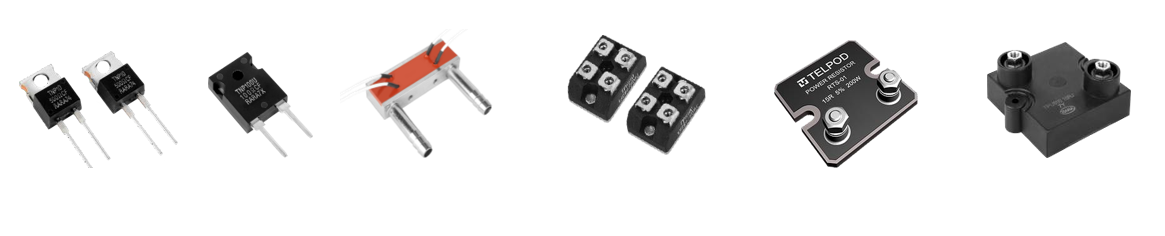 |
2. Structure and Operating Principle
Power Film Resistors are composed of several critical elements: 1. Substrate (Flange): Conducts heat efficiently from the resistive element. 2. Thermal Conductive Insulator: Provides insulation between the resistive element and the substrate. 3. Resistive Element: A film layer of metal oxide or metal film deposited onto the substrate. 4. Electrodes: Connect the resistive element to external terminals. 5. Protective Coating: Shields the resistor from environmental factors and physical damage. |
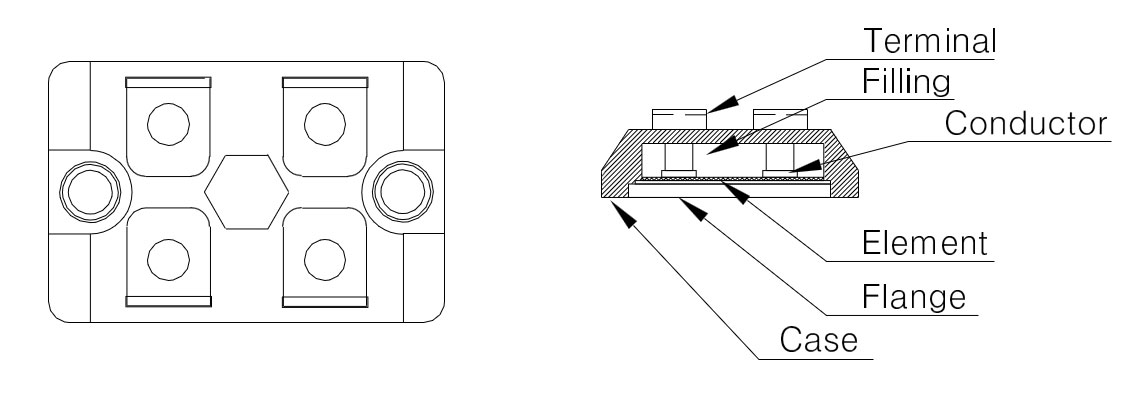
What Makes Power Film Resistors Special? • Film Uniformity: Ensures consistent current flow through evenly coated resistive films. • Thermal Management: Their structure supports excellent heat conduction, and when combined with forced cooling (heat sinks, fans), they perform reliably even under heavy power loads. • Low Inductance: The film-based design minimizes inductance, allowing distortion-free current limiting in high-frequency signals. |
3. Advantages of Power Film Resistors
1. High Power Handling - Built with a flange-mounted design, these resistors support very high power density, especially when paired with cooling systems like heat sinks or liquid cooling. 2. Excellent Thermal Stability - Unlike general resistors, power film resistors maintain stable performance under forced cooling. 3. Laser Trimming Capability - Resistance values can be finely tuned using laser trimming to achieve high accuracy. 4. Superior High-Frequency Characteristics - Deliver excellent performance in high-frequency circuits without distortion. |
• Current Limiting: Protects other circuit components by controlling current flow. • Voltage Regulation: Distributes or reduces voltage to maintain desired levels. • Signal Attenuation:Adjusts signal strength for accurate signal processing. • Voltage Division: Provides precise voltage values in divider circuits. • Circuit Protection: Prevents damage from overcurrent. |
Applications • Automotive Electronics: Engine control modules, sensors, and lighting systems. • Industrial Equipment: Motors, generators, and transformers. • Consumer Electronics: TVs, computers, smartphones. • Communication Systems: Signal processing and filtering to preserve signal integrity. |
Power Film Resistors have become indispensable in modern electronics thanks to their versatility and reliability.
1. High Power Density - Ideal for compact circuit designs with high power requirements. 2. Long Service Life - Exceptional durability and thermal resistance reduce maintenance needs. - Outstanding frequency response for reliable long-term operation. |
6. Importance in Power Supply Units (PSUs)
1. Current Limiting & Circuit Protection - Prevents component damage by limiting excessive current. 2. Voltage Division - Distributes voltage levels within multi-level power supplies. 3. Energy Dissipation - Converts excess power into heat, maintaining PSU stability. 4. Load Matching - Provides impedance matching in circuits, preventing signal distortion. |
Why They’re Essential • High Power Handling: Ensures consistent current flow through evenly coated resistive films. • Noise Reduction: Minimizes electrical noise and interference, improving PSU reliability. |
7. Conclusion